Forum Archives Illuminate Strategic Shifts in Early Handheld Console Competition
Written by Ines Hughes · Aug 20, 2026
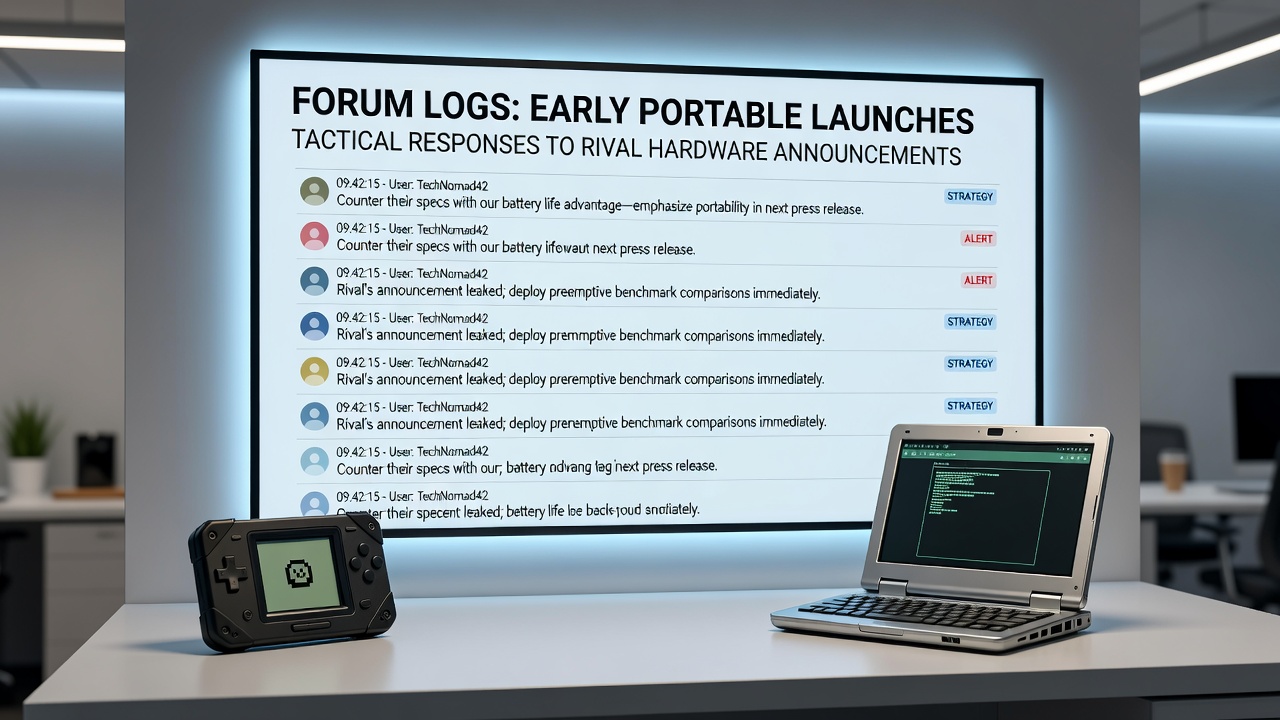
Forum Archives Illuminate Strategic Shifts in Early Handheld Console Competition
Forum logs preserved from the initial waves of portable hardware releases document a range of tactical adjustments made by industry participants, developers, and observers as competing devices entered the market, with patterns emerging around announcement timing and feature comparisons that shaped subsequent messaging and positioning efforts.
Records from major discussion boards active during the 2010 through 2012 period show threads where participants catalogued specifications of upcoming systems shortly after public reveals, often cross-referencing hardware capabilities such as processing power, display technology, and input methods against those of established rivals, while noting how companies adjusted launch lineups or promotional materials in response.
Patterns in Announcement Timing and Forum Reactions
Analysis of timestamped posts reveals clusters of activity immediately following key hardware unveilings, where users compiled lists of counter-features and speculated on market impacts, and developers referenced these conversations when refining their own communication strategies for subsequent events. Data from archived threads indicates spikes in mentions of specific rival attributes, such as stereoscopic display capabilities or motion controls, prompting rapid shifts in how other firms highlighted their own strengths in follow-up updates.
Those tracking these exchanges note that responses frequently involved accelerated release of gameplay footage or targeted interviews, with forum activity serving as an informal barometer for public sentiment that influenced decisions on which titles to emphasize during early portable system rollouts.
Developer and Publisher Adjustments Documented in Logs
Evidence from the logs points to coordinated efforts by software publishers who monitored rival announcements and adjusted their own portable game pipelines accordingly, including reallocating resources toward titles that addressed perceived gaps in the competitive landscape. One documented sequence shows a surge in posts about augmented reality features after a particular reveal, followed by increased activity around similar software demonstrations from opposing camps within weeks.
Researchers examining these records have identified repeated instances where marketing language evolved in direct relation to competitor disclosures, such as emphasizing battery life or storage options when those elements drew attention in rival presentations. According to industry reports compiled by the Entertainment Software Association, such responsive positioning contributed to broader market differentiation strategies during that era.
Additional threads captured internal-like discussions among enthusiasts who cross-posted information from official channels, creating feedback loops that companies appeared to monitor when scheduling their next tactical moves, including demo releases or feature spotlights timed to offset competitor momentum.
Market Positioning Through Community Channels

Logs further illustrate how early portable launches prompted shifts in community-driven content, with users creating comparison charts and strategy guides that indirectly reflected the evolving competitive tactics employed by hardware makers. These grassroots efforts often aligned with official announcements, suggesting a feedback mechanism where forum sentiment guided refinements in promotional approaches.
Figures from related academic studies at institutions in Canada indicate that such online exchanges played a measurable role in shaping consumer expectations, as publishers incorporated community-derived insights into their response frameworks during the handheld console transition period. What's notable is the way these adjustments appeared in real time through evolving thread topics, moving from speculation to detailed feature breakdowns as new information surfaced.
Observers tracking the progression across multiple boards have recorded how certain hardware announcements triggered immediate reevaluations of launch windows, with forum data showing increased references to regional availability and pricing structures that mirrored official adjustments announced shortly thereafter.
Long-Term Implications for Portable Gaming Strategies
Continued examination of these early records in August 2026 by digital historians underscores the lasting value of forum archives as sources for understanding how tactical responses unfolded during pivotal moments in portable hardware competition. Patterns identified include the use of targeted content releases to counter specific rival strengths, a practice that persisted across subsequent console generations.
Links to reports from the Interactive Software Federation of Europe provide additional context on how European market dynamics influenced these responses, with data showing variations in emphasis on features like connectivity options when addressing different regional audiences.
Overall the preserved discussions offer a detailed window into the mechanisms through which companies navigated competitive pressures, relying on observable shifts in forum discourse to inform their next steps without direct attribution in public statements.
Conclusion
The body of forum evidence from those launch periods continues to serve as a factual record of how rival hardware announcements prompted measurable tactical adaptations, ranging from adjusted promotional timing to feature highlighting that addressed emerging market comparisons. Such documentation remains relevant for those studying the evolution of portable gaming ecosystems and the role of community feedback in strategic decision-making processes.